When Should a Driver Use Dipped Headlights? The Ultimate Irish Road Safety Guide
Navigating Irish roads requires constant attention to weather conditions and changing daylight hours. From the narrow, unlit boreens of rural Ireland to busy urban streets during heavy downpours along the Wild Atlantic Way, your vehicle’s lighting system is your most crucial safety tool. However, many motorists are still uncertain about the exact rules: When should a driver use dipped headlights, and how do they differ from main beams or daytime running lights (DRLs)?
Understanding correct headlight usage is not only essential for road safety and avoiding traffic penalties, but it also directly impacts your car’s National Car Test (NCT) results. If your dipped beams are misaligned, dim, or obscured by oxidized polycarbonate lenses, you risk failing your NCT inspection and endangering yourself and other road users.
In this comprehensive guide, we will break down the legal requirements for dipped headlights in Ireland, outline the exact scenarios when you must switch them on, explain how lens clarity affects dipped beam output, and share how professional solutions from headlight restoration specialists in Limerick can restore your night-driving visibility.
What Exactly Are Dipped Headlights? (Dipped Beams vs. Main Beams)
Before exploring specific driving situations, it is vital to understand what dipped headlights are and how their beam pattern functions.
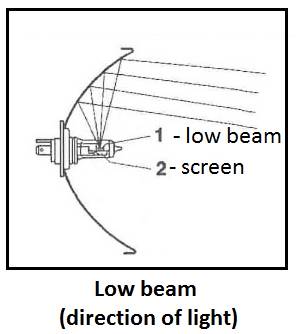
Dipped Headlights (Low Beam): Dipped headlights are angled downwards towards the road surface ahead. They are specifically designed to illuminate the pavement (typically around 30 to 50 metres ahead) without dazzling or blinding oncoming drivers or pedestrians.
Main Beams (High Beam): Main beams project light straight ahead across a long distance. They are intended exclusively for unlit rural roads when no other vehicles are nearby.
Daytime Running Lights (DRLs): DRLs turn on automatically with your engine to make your car visible during bright daylight. Crucially, DRLs do not illuminate the rear tail lights and do not project a focused beam on the road. They should never be used as a substitute for dipped headlights in low-visibility conditions.
When Should a Driver Use Dipped Headlights? (Key Scenarios)
Under Irish rules of the road and general road transport regulations, motorists should switch from DRLs or main beams to dipped headlights in the following specific situations:
1. Just Before Sunset and Until Just After Sunrise
Even if there is lingering ambient light during twilight, switching to dipped headlights ensures your vehicle is clearly visible to cross-traffic, cyclists, and pedestrians from both the front and rear.
2. During Poor Daytime Visibility (Rain, Fog, Mist, and Snow)
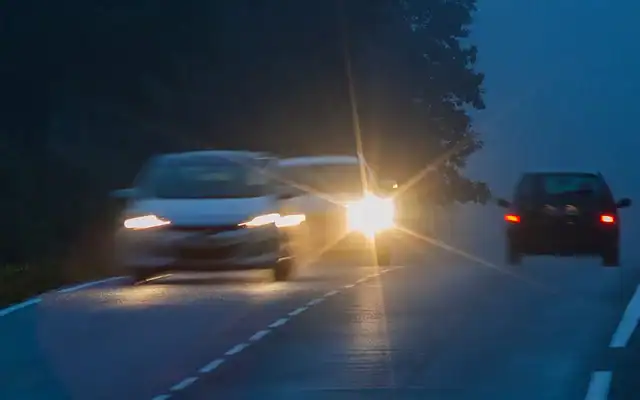
Irish weather can change drastically within minutes. When driving through heavy rain, coastal mist, dense fog, or falling snow, your visibility drops rapidly. DRLs are insufficient here because they do not switch on your rear lights. Turning on dipped headlights illuminates the road and renders your rear reflectors visible to trailing traffic.
3. When Following Another Vehicle
When driving behind another car at night, using main beams reflects intense glare into their rearview and side mirrors, temporarily blinding the driver. You must dip your headlights as soon as you get close to a lead vehicle.
4. When Meeting Oncoming Traffic
If you are using main beams on an unlit road and see an oncoming vehicle (or motorcycle), you must dip your headlights immediately. Leaving main beams on creates dangerous blind spots for approaching drivers.
5. In Built-Up Areas and Well-Lit Street Sections
When driving through towns, cities, or residential areas with street lighting, main beams are prohibited because street lamps provide primary ambient lighting. Dipped headlights must be used to keep your car identifiable without causing harsh glare.
6. When Driving Through Tunnels
Always switch on dipped headlights before entering a road tunnel. Tunnels present rapid lighting changes, and dipped beams ensure immediate visibility to other motorists inside the structure.
7. When Passing Pedestrians or Cyclists
If you are on an unlit rural road using main beams and encounter a pedestrian or cyclist, dip your lights right away to avoid dazzling them as you pass.
Why “Good” Dipped Headlights Can Still Fail You at Night
Knowing when to use dipped headlights is only half the equation. If you switch on your dipped beams and the light output is dim, yellow, or hazy, you are still driving at high risk.
Over several years of exposure to UV radiation, road grit, salt, and atmospheric weathering, clear polycarbonate headlight lenses oxidize. This creates a cloudy, chalky layer across the plastic surface.
Scattered Light Rays: Instead of projecting a crisp, downward-focused beam onto the asphalt, hazy lenses scatter the light rays in all directions.
Glare for Oncoming Drivers: Scattered light leaks upwards into the eyes of approaching motorists—ironically causing glare despite using low beams.
Severe Loss of Beam Distance: Oxidized plastic can block over 70% of total lumen output, meaning your dipped beams may only illuminate 10 metres instead of 40 metres ahead.
Dipped Headlights and the NCT: What Inspectors Look For
During the Irish National Car Test (NCT), lighting integrity is heavily evaluated. When inspectors test your dipped headlights, they check three key elements:
Light Intensity (Lux Output): The beam must produce sufficient brightness to pass statutory intensity thresholds.
Beam Cut-Off Line & Alignment: The dipped beam must feature a sharp, clear cut-off pattern angled slightly to the left side of the road.
Lens Clarity and Physical Condition: Severely yellowed, oxidized, cracked, or moisture-filled lenses result in an immediate NCT fail or refusal.
⚠️ NCT Tip: Simply putting brighter or higher-wattage bulbs into oxidized headlight units will not fix your beam pattern. The cloudy plastic lens will still diffuse the light, resulting in an NCT failure for incorrect beam focus.
Internal Moisture and DRL Component Failures in Dipped Beams
Beyond exterior lens haze, internal water ingress is another common culprit behind weak dipped headlight performance.
When rubber housing seals perish or rear access caps are misplaced, condensation forms on the inside of the lens. Water droplets act like tiny lenses, refracting light unpredictably and corroding delicate electrical connections.
In modern vehicles with integrated LED DRLs and xenon dipped modules, trapped moisture can destroy the electronic control unit (ECU) or short out the printed circuit board (PCB). Rather than spending €800 to €2,000 at a main dealership for a replacement housing, specialized headlight restoration services in Limerick can open, dry, reseal, and repair internal circuit components at a fraction of the cost.
Professional Headlight Restoration: The Fast Fix for Low Visibility
If your dipped headlights look cloudy, faded, or dim, professional restoration brings them back to factory specifications without requiring expensive brand-new parts.
At HeadlightPro.ie, the restoration process follows a meticulous multi-step refinishing protocol:
Precision Masking: Surrounding paintwork is protected with multi-layer automotive masking tape.
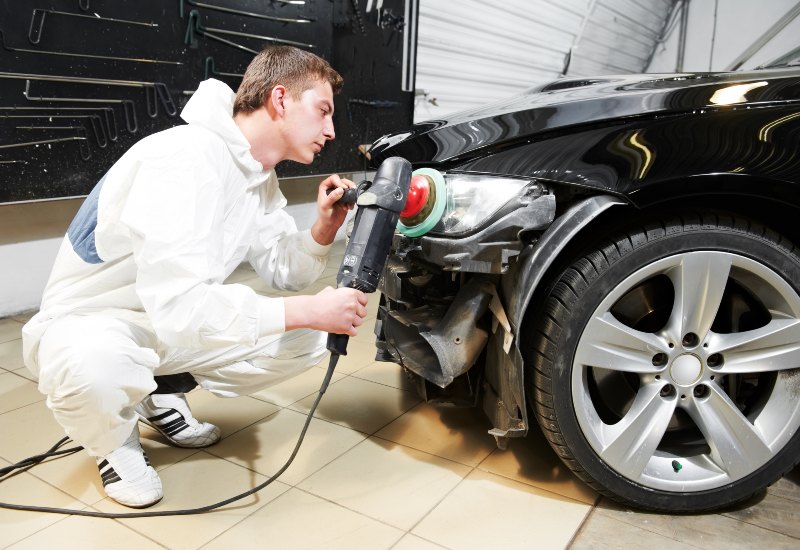
Pneumatic Wet Sanding: Oxidized UV layers are removed using progressive-grit sandpaper grades (P800 to P3000).
Compound Polishing: Optical clarity is restored with specialized cutting compounds and refining pads.
UV-Resistant Protective Coating: A hard-wearing sealant layer is cured onto the polycarbonate to shield it from future UV breakdown.
NCT Alignment Check: The dipped beam focus is verified to ensure immediate NCT pass compliance.
Dipped Headlight Troubleshooting Quick Reference
Problem Observed
Cause
Recommended Solution
Yellowish / Milky Lens Exterior
UV oxidation of polycarbonate plastic
Multi-stage wet sanding & UV restoration
Water Droplets Inside Lens
Damaged seals or compromised breather vents
Sealing inspection, internal dry-out & resealing
Uneven / Scattered Beam Pattern
Surface pitting or improper bulb installation
Lens polishing & beam alignment verification
Dim Light Despite New Bulbs
Degraded inner reflector or hazy outer lens
Professional lens clarity restoration
Conclusion: Keep Your Dipped Headlights Clear and Compliant
Knowing when to use dipped headlights—during twilight, bad weather, heavy rain, tunnels, and whenever approaching other vehicles—is a fundamental part of driving safely in Ireland. However, your knowledge is only as effective as your vehicle’s equipment.
If your dipped beams are hindered by hazy, cloudy, or moisture-filled lenses, do not wait for an NCT failure or a dangerous night-driving encounter to fix the problem. Professional restoration restores crystal clarity, secures optimal light projection, and keeps your wallet happy compared to replacement costs.
For expert advice or to schedule a fast, guaranteed headlight restoration, reach out to the specialists at HeadlightPro.ie today. Restore your night vision and drive with total confidence on Irish roads.
Clear, bright headlights are crucial for safe nighttime driving, especially through misty mornings, heavy rainfall, and unlit rural roads across Ireland. Over Clear headlights matter.